When a low-profile keyboard is worth it
A slimmer board can make sense for laptop users, travelers and shallow desks. Compare the front edge and the keys together.
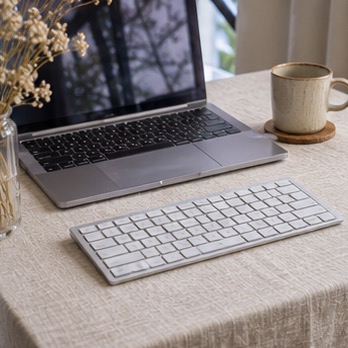
Moving your laptop onto a stand raises the screen and leaves the keyboard out of reach. A separate keyboard solves that, but a tall mechanical case can feel like a big change after years of typing on a low laptop deck. A slim board offers a more familiar starting point and packs more easily when the desk changes every day.
Slim keyboards cover several designs. A flat scissor board can feel close to a laptop, while a low-profile mechanical model usually gives you a more pronounced stroke. The right choice depends on the feel you want and how the whole setup fits together.
Compare the edge your hands actually meet
Look at the front edge with the adjustable feet folded in. Marketing measurements sometimes describe the highest point on the case, which is less helpful for a board used flat. Note the key height at the home row and check whether the board tends to move when you type. A thin keyboard with firm feet is easier to live with than one you have to pull back into position every few minutes.
Use your current keyboard to identify your own preference. Try a brief session at your normal desk with the feet retracted and note whether you want a lower front edge, shorter travel, or simply more room between the desk edge and the keys.
Decide what is worth trading away
A low-profile mechanical board can offer the switch feel you want in a case that slips into a bag. Aftermarket switches and caps are often limited to the keyboard's family. If you expect to change the sound and look regularly, a standard mechanical board with widely available parts can be a better long-term purchase. For straightforward typing, a slim scissor board with a familiar layout may be all you need.
Try it during a real work block
Use the same desk and height you plan to keep. Answer emails, run a spreadsheet shortcut and type a few lines while you speak on a call. Check whether you can read the legends in evening light and use the arrow cluster without looking down. Buy from a retailer that gives you time to make those comparisons, because size and switch travel alone won't tell you which keyboard you'll reach for tomorrow.
Further reading
Related guides
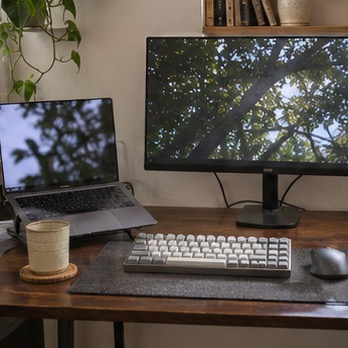
One keyboard for a work laptop and a personal computer
Compare multi-device pairing with a USB switch, and make sure the setup fits both operating systems.
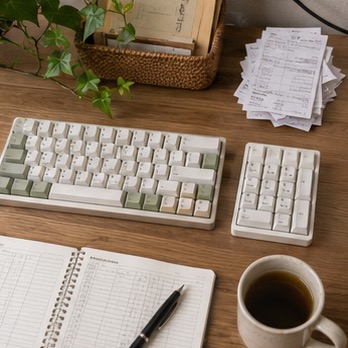
Do you need a full-size keyboard or a separate numpad?
A detachable number pad can reclaim mouse space, while a full-size board suits a desk built around frequent number entry.
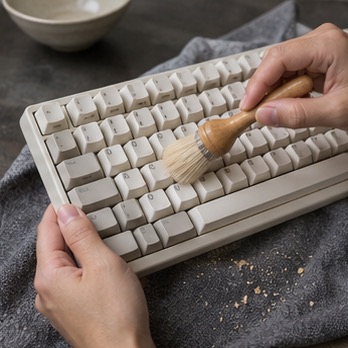
Clean your keyboard before you replace it
Start with a brush and a lint-free cloth. Save bigger purchases for the parts that are actually worn.