Will those keycaps actually fit your keyboard?
Work through the switch mount, regional layout and unusually sized keys before buying a replacement set.
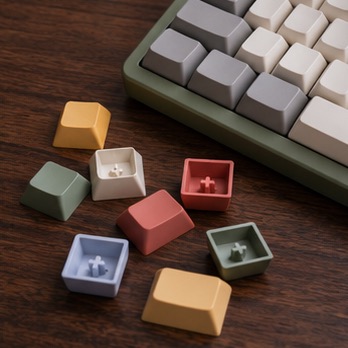
A good-looking keycap set can transform a desk and still leave you with a bare right Shift. That is especially easy to do on a compact keyboard where several keys are narrower than they look in the product photo. The most useful image in a listing is usually the diagram that lays out every cap included in the box.
Start by finding the model number on the underside of your board and looking up its exact layout. Write down the regional version and take a straight overhead photo of your current keys. Keep both beside the listing while you work through the fit checks.
Find the stem and account for the profile
A cross-shaped mount is common on standard-height MX-style mechanical boards. Check the maker's compatibility page for low-profile, laptop-style or proprietary models. A matching-looking stem alone cannot tell you whether there is space under the cap for the full press or whether the stabilizer mounts line up.
Cap profile affects height and shape. A sculpted set organizes caps by row, so a key that physically fits can still sit at the wrong angle on a compact navigation column. A uniform profile gives you more freedom to move matching-sized caps between rows.
Check the keys that break the pattern
Compare Enter, left and right Shift, Backspace and the entire bottom row. A tall ISO Enter needs an ISO-capable set. A compact right Shift, short modifiers or an unusual spacebar can require an extended kit. Match sizes using the diagrams and compare the printed legends too. If you type in more than one language, a physically perfect kit can still have letters or punctuation you don't want.
Spend for the improvement you can feel
If worn legends are the reason for replacing the caps, prioritize readability and check whether light passes through the lettering if you rely on backlighting. If you're changing feel, a small set you can return is a lower-risk first purchase than a collectible kit. Keep the original caps in a labeled bag. They make a fallback if a replacement profile interferes with a neighboring key or you decide to sell the board later.
Further reading
Related guides
When a low-profile keyboard is worth it
A slimmer board can make sense for laptop users, travelers and shallow desks. Compare the front edge and the keys together.

One keyboard for a work laptop and a personal computer
Compare multi-device pairing with a USB switch, and make sure the setup fits both operating systems.

Do you need a full-size keyboard or a separate numpad?
A detachable number pad can reclaim mouse space, while a full-size board suits a desk built around frequent number entry.