A small phone tripod for filming at home
For recipes, repairs, and craft tutorials, choose a mount according to camera position, stability, and the room you have.
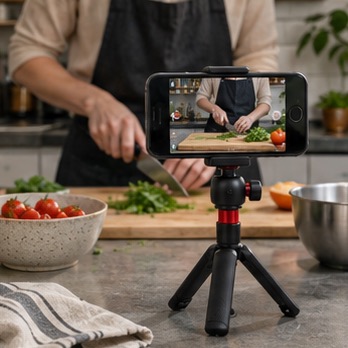
You need two hands to knead dough, thread a sewing machine, or show a friend a repair. The phone leaning against a mug keeps sliding, and the moment you want to capture happens out of frame. A small stand can help once you know what the camera needs to see.
Make a short trial clip with a helper holding the phone or with a stable surface at roughly the desired height. Check whether the audience needs your face, your hands, or a view straight down at the work. Those angles put the phone in very different places.
Use a tabletop tripod for a side view
A short tripod is an easy fit for a cooking demonstration shot from the front or a close shot of tools laid out on a workbench. Compare the height of the lens to the top of the objects you are filming. A stand that sits too low may put the rim of a bowl in the way. A tilting head gives a little more control without requiring a taller stand.
Check how widely the legs open. Wider placement can make the tripod feel steadier but uses more counter space. A narrow adjustable stand is easier to place in a tight gap. Position it where your arm and ingredients can move without hitting the phone or its legs.
Choose an overhead arm for clear top-down footage
A clamp arm can move the support off to the edge of a work surface. Measure the thickness of that edge, including any decorative trim, and compare it with the stated clamp range. Look at the arm’s supported load when extended. Include the phone, case, and any attached accessories. Check the surface can hold the clamp securely before putting equipment above the work.
Check the mount before adding more gear
Read the phone holder’s fit range and check whether the jaws cover a power or volume button. Try the orientation you need for your platform and leave enough room to connect a charger or microphone if you use one. A shutter remote can be handy if the camera sits out of reach. For most kitchen and hobby clips, setting the frame once and starting the recording by hand is a good way to begin.
Related guides
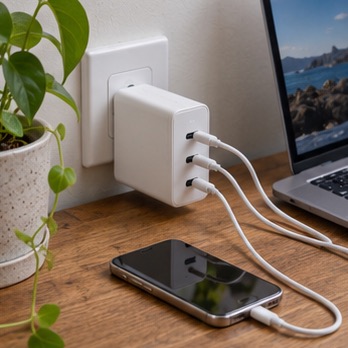
How to share one USB-C charger between your laptop and phone
The number on the box only tells part of the story. Read the port chart to see what your devices actually get.
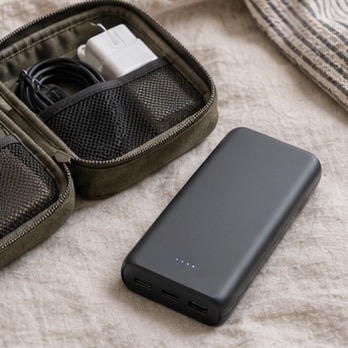
Choosing a carry-on power bank you’ll actually pack
A battery for one long travel day should fit the way you carry, charge, and board.
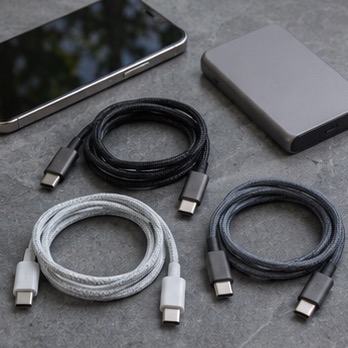
Which USB-C cable do you need for charging or data?
Match the cable to the job before paying for extra bandwidth or carrying another adapter.